Hire Forward Deployed Engineers to Turn Complex Problems Into Production Software
Bring engineering closer to the people and workflows your product needs to serve. Axora's Forward Deployed Engineers work with your team to understand real operational challenges, design practical solutions, integrate with existing systems, and deliver software that works in production—with AI engineering as a core specialization.
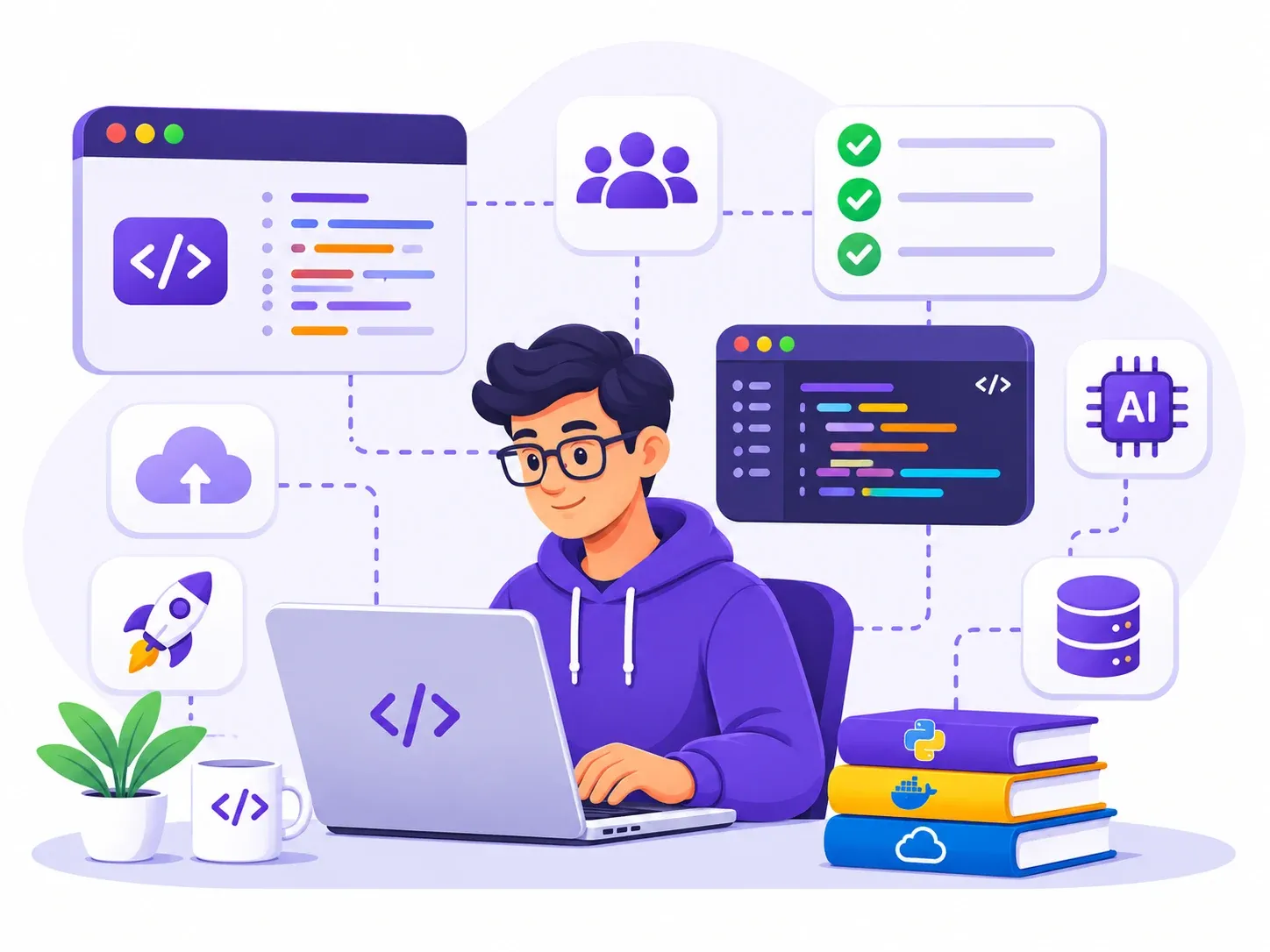
Engineering Embedded in the Customer's Real-World Problem
A Forward Deployed Engineer (FDE) is a software engineer who works closely with customers or internal business teams to solve problems in the environment where those problems actually occur. Rather than working only from predefined specifications, an FDE helps discover the requirements, evaluates technical constraints, builds a solution, and adapts it through direct feedback.
This role combines software engineering with technical discovery, solution design, integration work, and customer collaboration. An FDE may build a proof of concept, connect it to production data and APIs, develop the application around it, and help teams deploy, monitor, and improve the result.
For AI initiatives, this can include connecting language models to company knowledge, implementing retrieval-augmented generation (RAG), orchestrating tools and agents, integrating business systems, and establishing evaluation and operational safeguards. The goal is not an isolated demo; it is a useful capability that fits the customer's workflow.
Axora Infotech helps businesses add FDE capability for product development, enterprise integrations, workflow automation, and AI implementation. We align the engineer's experience with your users, systems, security requirements, delivery goals, and existing technology stack.
The FDE approach
From Business Context to Working Software
FDEs connect discovery and delivery. They can move between stakeholder conversations, code, integrations, deployment, and feedback without losing sight of the business outcome.
Discover the actual workflow
Work with users and stakeholders to understand how work happens today, where friction exists, and what a successful outcome should look like.
Shape a practical technical solution
Translate business needs into system requirements, architecture decisions, integration plans, and a delivery path that fits existing constraints.
Build and integrate
Develop application features, APIs, data workflows, automations, and AI capabilities that connect with the customer's real systems.
Deploy, validate and improve
Take solutions into the target environment, observe how they perform, resolve issues, and iterate with feedback from the people using them.
Where FDEs contribute
Core capabilities
What Our Forward Deployed Engineers Can Do
We match engineering capability to the work that needs to happen—not just to a job title or a single framework.
Technical Discovery & Solution Design
Map user workflows, identify constraints, clarify requirements, assess APIs and data sources, and turn ambiguous problems into an actionable technical plan.
Full-Stack Application Engineering
Build interfaces, backend services, APIs, data models, authentication, and application workflows needed to deliver a complete solution.
AI, LLM & RAG Implementation
Integrate model providers, retrieval pipelines, structured outputs, tool calling, evaluation, and human review into real product workflows.
AI Agents & Workflow Automation
Connect models with approved tools, APIs, business rules, and multi-step processes while accounting for permissions, failure handling, and observability.
Enterprise Systems & API Integration
Connect CRMs, ERPs, SaaS platforms, databases, identity systems, communication tools, and internal services through maintainable integrations.
Deployment & Production Readiness
Prepare environments, CI/CD, monitoring, logging, access controls, performance checks, and operational handover for dependable releases.
Use cases
When to Bring a Forward Deployed Engineer Into Your Team
FDEs are especially useful when the problem is clear at a business level but the implementation requires discovery, integration, and close collaboration.
Implement AI Across Business Operations
Apply AI to document-heavy processes, customer support, internal knowledge, reporting, or operational workflows using the right data and system integrations.
Connect Fragmented Enterprise Systems
Unify information and processes across existing platforms where off-the-shelf connectors do not fully address the workflow.
Validate a New Product or Technical Concept
Build a focused proof of concept, test assumptions with users, and establish what is required to move toward a maintainable production release.
Extend an Existing SaaS Product
Deliver customer-specific capabilities, integrations, data workflows, and product features without losing alignment with the core platform.
Automate Complex Operational Workflows
Replace manual handoffs with connected applications, approval flows, event-driven processes, and measurable automation.
Embed Engineering Alongside Customer Teams
Give product, operations, and technical stakeholders a hands-on engineering partner who can understand context and implement solutions.
Specialization areas
FDE Profiles for Different Engineering Challenges
The right FDE profile depends on the problem, the systems involved, and how much of the solution needs to be built or integrated.
AI & Applied AI FDE
For organizations implementing AI capabilities in real products and operational environments.
What makes the role different
An FDE Is More Than a Developer Assigned to a Customer
The value of the role comes from combining engineering depth with the ability to work through uncertainty and stay close to the outcome.
Outcome-oriented problem solving
Start with the customer's operational or product objective, then determine what should be built and how success will be evaluated.
Direct stakeholder collaboration
Communicate with users, business owners, product managers, and technical teams to validate assumptions and keep decisions grounded in context.
Cross-system thinking
Understand how applications, APIs, data, permissions, infrastructure, and people interact across the complete workflow.
Hands-on implementation
Turn plans into working code, integrations, deployments, and improvements rather than stopping at recommendations or architecture documents.
Technologies Our Forward Deployed Engineers Work With
Technology choices depend on your current environment, security requirements, integration landscape, and product goals. We aim to work with your stack where practical rather than introduce unnecessary complexity.
Skills and working style
Skills to Look for When Hiring a Forward Deployed Engineer
A strong FDE combines practical software engineering with communication, adaptability, and sound judgment in customer environments.
Engagement options
Add FDE Capability in a Way That Fits Your Team
Start with a defined technical challenge or bring in ongoing engineering capacity. The engagement should reflect the scope, level of customer interaction, and delivery ownership required.
Dedicated FDE
Add an engineer who works closely with your stakeholders and technical team on a defined product, integration, or implementation roadmap.
Part-Time or Specialist Support
Bring in focused FDE capacity for discovery, architecture, a complex integration, an AI implementation, or a specific delivery phase.
Cross-Functional Delivery Team
Combine FDE capability with frontend, backend, AI, QA, and DevOps skills when the solution requires multiple engineering disciplines.
How we work
How to Hire a Forward Deployed Engineer Through Axora Infotech
We begin with the customer problem and delivery environment, then align the engineer's skills and responsibilities to the work.
Discuss the Business Challenge
Explain the workflow, users, desired outcome, existing systems, technical constraints, and what is currently blocking progress.
Define the FDE Role and Scope
Agree on the responsibilities, required engineering depth, customer interaction, technology context, collaboration model, and expected deliverables.
Review Relevant Engineering Experience
Evaluate practical problem solving, system design, implementation ability, integration experience, communication, and relevant AI or domain expertise.
Align on Access and Ways of Working
Set expectations for repositories, environments, data access, security, communication, reviews, documentation, and delivery milestones.
Build, Deploy and Iterate
Work through the agreed scope, validate with stakeholders, deploy through the appropriate release process, and improve based on real usage and feedback.
FDE Delivery Should Include Production Ownership, Not Just a Successful Demo
A prototype can demonstrate that an idea is technically possible. A production implementation must also account for authentication, authorization, data quality, integration failures, latency, cost, observability, testing, deployment, and the people who will operate the system.
For AI-enabled workflows, teams should additionally consider model evaluation, retrieval quality, prompt and tool behavior, sensitive-data handling, fallback paths, human approval, and ongoing monitoring. These requirements vary by use case and should be addressed according to the risk and business context.
Before an engagement begins, align on what the FDE is expected to own: discovery, implementation, integration, deployment support, documentation, knowledge transfer, or ongoing iteration. Clear responsibilities help customers understand progress and help engineers focus on meaningful outcomes.
Need an Engineer Who Can Work From the Problem to the Production Solution?
Tell us about the users, workflow, systems, and outcome you are targeting. Axora Infotech can help define the FDE profile and engineering capability needed for your implementation.
Ready to Transform Your Business?
Get started with our intelligent digital solutions. Our team is ready to help you unlock the power of AI-driven technology.
Send us a message
Fill out the form below and we'll get back to you within 24 hours
Contact Information
Reach out to us through any of these channels
Frequently Asked Questions About Hiring Forward Deployed Engineers
Answers to common questions about the FDE role, technical capabilities, engagement models, and delivery expectations.