ERP Development Services
Build one connected operational system for finance, inventory, procurement, HR, sales, manufacturing, supply chain, and reporting. Axora develops custom ERP software around your workflows, data, integrations, permissions, and growth plans.
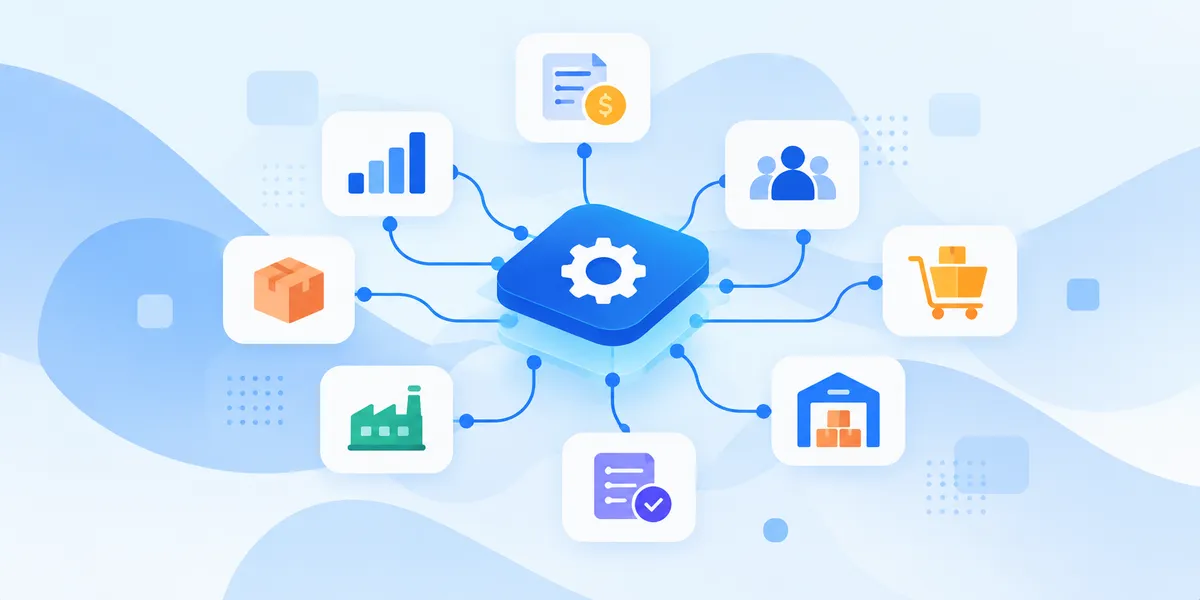
ERP Software Development Built Around Your Operations
ERP development is about more than putting accounting, inventory, HR, purchasing, and sales screens into one application. A useful enterprise resource planning system connects the transactions and decisions that move a business every day. A purchase can affect inventory. Inventory can affect production and fulfilment. Sales orders can affect procurement. Finance needs the resulting transactions. Management needs reliable reporting across all of them.
When those processes live in disconnected applications, spreadsheets, email threads, and manual approvals, teams spend time reconciling information instead of acting on it. Custom ERP software development gives businesses an opportunity to design those workflows as one connected operating system, while still integrating with specialized systems where replacing them would not make sense.
Axora provides ERP development services for businesses that have outgrown spreadsheets or disconnected tools, organizations with workflows that do not fit packaged ERP software, and teams modernizing an existing ERP application. We start with the operating model, data relationships, roles, approvals, integrations, and reporting requirements before deciding which modules and technology should be built.
The goal is not to build the biggest ERP possible. The goal is to create a dependable business platform that reduces duplicate work, improves visibility, supports controlled processes, and can evolve as the organization adds products, locations, users, suppliers, customers, and operational complexity.
Business & Operational Context
Who We Help With ERP Development
ERP projects can begin from very different operational problems. We adapt the scope and delivery approach to the business, existing systems, data, and priorities.
- ✓Growing BusinessesReplace spreadsheets and disconnected applications with connected finance, inventory, procurement, sales, HR, and operational workflows as the business grows.
- ✓Manufacturers & DistributorsConnect purchasing, stock, warehouses, production, sales orders, suppliers, fulfilment, costing, and operational reporting around real workflows.
- ✓Multi-Branch OrganizationsSupport multiple branches, warehouses, teams, entities, approval structures, inventory locations, and consolidated reporting without duplicating systems.
- ✓Businesses Modernizing Legacy ERPImprove aging ERP applications through phased modernization of data access, APIs, interfaces, integrations, infrastructure, testing, and performance.
ERP Solutions We Offer
ERP Development Services for Different Business Needs
ERP initiatives vary by industry, operational maturity, and module requirements. We provide focused ERP development services that can be combined into a complete enterprise resource planning platform without creating thin pages for every capability.
- ✓Custom ERP Software DevelopmentBuild ERP software around your finance, operations, inventory, procurement, HR, sales, manufacturing, and reporting workflows instead of forcing the organization into a generic process model.
- ✓ERP Consulting & StrategyMap business processes, identify operational gaps, prioritize modules, define data ownership, evaluate integration needs, and create a practical ERP roadmap before development.
- ✓ERP Module DevelopmentDevelop focused modules for finance, accounting, inventory, procurement, sales, HR, payroll, manufacturing, warehouse operations, projects, service, or industry-specific workflows.
- ✓ERP Integration ServicesConnect ERP software with CRM, e-commerce, accounting, payment, banking, logistics, communication, analytics, identity, and internal systems through reliable APIs and data flows.
- ✓ERP Migration & Data ConversionMove data from legacy ERP systems, spreadsheets, accounting tools, or disconnected applications while handling mapping, duplicates, relationships, validation, historical data, and cutover risks.
- ✓ERP Implementation & CustomizationConfigure and extend an existing ERP when a packaged platform is appropriate but requires custom workflows, fields, integrations, reports, permissions, or modules.
- ✓Cloud ERP DevelopmentBuild cloud-ready ERP applications with scalable infrastructure, controlled environments, secure access, deployment workflows, monitoring, backups, and operational visibility.
- ✓ERP Automation & Workflow DevelopmentAutomate approvals, purchase requests, stock alerts, invoice workflows, task assignments, notifications, reconciliations, and other repeatable operational processes.
- ✓ERP Reporting & Business IntelligenceCreate operational dashboards, management reports, financial views, inventory analytics, procurement insights, and cross-department reporting from connected business data.
- ✓ERP Modernization ServicesModernize legacy ERP architecture, databases, APIs, frontend applications, integrations, testing, performance, security, and infrastructure through a phased approach.
- ✓Mobile ERP SolutionsExtend important ERP workflows to mobile experiences for field teams, warehouse staff, sales teams, managers, technicians, and other users who work away from a desktop.
- ✓ERP Maintenance & Continuous ImprovementImprove an ERP after launch through monitoring, bug fixes, performance work, security updates, new modules, workflow changes, integrations, and product improvements.
Core ERP Modules
ERP Modules We Develop
The right ERP module mix depends on the operating model. We prioritize the processes that create the most operational value and then connect them through a shared data foundation.
Finance & Accounting
Support accounts, invoices, expenses, payments, budgets, financial transactions, approvals, reporting, and finance workflows around the organization's requirements.
Inventory & Warehouse Management
Track products, stock levels, locations, transfers, receipts, dispatches, adjustments, reorder rules, batches, serials, and warehouse operations where required.
Procurement & Vendor Management
Manage purchase requests, approvals, purchase orders, suppliers, quotations, receipts, vendor information, and procurement workflows.
Sales & Order Management
Connect quotations, sales orders, customers, pricing, fulfilment, invoices, delivery workflows, and downstream operational processes.
Human Resources & Payroll
Manage employee records, attendance, leave, approvals, payroll-related workflows, organizational structures, and HR reporting according to project requirements.
Manufacturing & Production
Support bills of materials, production planning, work orders, material requirements, production stages, costing, quality workflows, and production visibility.
Supply Chain & Logistics
Coordinate suppliers, purchasing, inventory movement, warehouses, shipments, delivery operations, and supply-chain reporting across locations.
Projects & Service Operations
Track projects, resources, tasks, service requests, assignments, time, operational status, and customer-related delivery workflows where relevant.
ERP Architecture and Shared Business Data
An ERP creates value when its modules understand the same business events. A purchase order should not be an isolated record from inventory. A goods receipt can affect stock and purchasing. A sales order can influence fulfilment and finance. Employee information can feed HR workflows and payroll processes. These relationships require a deliberate shared data model rather than a collection of independent modules.
We design ERP architecture around core entities such as organizations, branches, warehouses, products, suppliers, customers, employees, orders, transactions, documents, approvals, and operational events. The exact model changes by industry, but the principle is consistent: important relationships should be represented once and reused across the workflows that depend on them.
The application architecture also separates user experiences, business logic, APIs, background processing, data storage, reporting, files, notifications, and integrations where appropriate. This helps the ERP evolve without turning every module into a dependency that is difficult to change.
For larger deployments, we also consider multi-entity structures, multiple locations, currencies, tax rules, permissions, audit requirements, high-volume transactions, background workloads, and reporting performance during architecture planning.
ERP Workflows, Automation and Operational Control
ERP software should reduce the coordination work surrounding routine business operations. That means more than storing transactions. It should make approvals clear, route work to the right people, expose exceptions, and provide visibility into what needs attention.
Examples include purchase requests moving through approval levels, low inventory triggering replenishment workflows, invoices entering verification queues, goods receipts updating inventory, sales orders creating fulfilment tasks, employee requests reaching managers, or service activities generating follow-up work.
Automation should be based on explicit business rules and reliable events. Not every workflow needs to be automatic, especially where financial or operational judgment is required. A well-designed ERP makes the decision visible and automates the repeatable steps around it.
This approach also improves accountability. Users can see who owns an activity, which approval is pending, what changed, what information is missing, and what action should happen next.
ERP Integration, APIs and Connected Business Systems
ERP software is often the operational center of a wider technology ecosystem. Businesses may already depend on CRM platforms, e-commerce stores, payment gateways, banks, accounting tools, logistics providers, communication platforms, identity systems, analytics tools, or industry-specific applications.
Our ERP integration approach begins with data ownership. We identify which system is authoritative for each important record, when data needs to move, which events should trigger synchronization, and what should happen when an external system is unavailable.
APIs, webhooks, scheduled synchronization, queues, validation, retries, idempotency, logging, and reconciliation can all play a role depending on the integration. The objective is not to synchronize everything blindly; it is to create predictable data flows that keep the ERP and connected systems consistent.
A well-integrated ERP can therefore become a reliable operational hub without requiring the business to replace every specialized application it already uses.
ERP Security, Permissions and Auditability
ERP systems contain sensitive financial, employee, supplier, customer, operational, and commercial information. Security needs to reflect how departments actually work and which actions each role should be able to perform.
We design access controls around roles, teams, branches, entities, responsibilities, records, and business actions where required. A user may need access to inventory without access to payroll, while a manager may need approval rights without unrestricted access to every administrative function.
Auditability is equally important for operational software. Important changes, approvals, transactions, configuration updates, and sensitive actions may need traceability so teams can understand what happened and investigate discrepancies.
The final security model depends on the organization's data, users, integrations, regulatory requirements, and operating environment. We build controls around those requirements instead of applying a generic checklist.
ERP Reporting, Analytics and Business Visibility
One of the strongest reasons businesses invest in ERP software is to replace fragmented operational reporting with a more reliable view of the organization. Leadership should not need to reconcile five spreadsheets to understand inventory, purchasing, sales, cash movement, production, or operational performance.
We design reporting around the decisions different users need to make. Finance may need transaction and financial views. Procurement may need supplier and purchasing trends. Operations may need workload and fulfilment visibility. Warehouse teams may need stock movement and replenishment information. Leadership may need consolidated performance across locations or business units.
Dashboards are only useful when the underlying data is trustworthy. We therefore consider validation, transaction relationships, historical information, ownership, integration behavior, and reporting definitions during ERP development.
Where appropriate, ERP data can also support advanced analytics, forecasting, anomaly detection, recommendations, or AI-assisted reporting. These capabilities should enhance operational decision-making while preserving the underlying business records as the source of truth.
ERP Migration and Data Cleanup
Replacing an ERP or consolidating business systems is as much a data project as a software project. Historical records may contain duplicate customers, inconsistent product codes, outdated suppliers, missing relationships, inconsistent units, or fields that have different meanings across systems.
We plan migrations by mapping the old data model to the new ERP structure, defining transformation rules, identifying records that require cleanup, validating relationships, and testing representative datasets before production cutover.
Migration plans also consider integration dependencies and operational continuity. The business needs to know when the old system stops accepting changes, how final data is reconciled, what happens to historical records, and how teams verify that the new ERP contains the information they need.
For larger projects, migration can be phased so individual modules, branches, or data domains move in controlled stages rather than creating unnecessary risk through a single large cutover.
ERP Modernization Without an Unnecessary Rewrite
Legacy ERP systems often remain deeply embedded in the business even when their architecture has become difficult to maintain. A full rewrite can introduce significant operational risk, especially when undocumented business rules have accumulated over many years.
Our ERP modernization approach starts with the current system: architecture, database, integrations, infrastructure, performance, testing, deployment process, security, and user workflows. We identify which problems need architectural change and which can be solved incrementally.
Modernization may include improving APIs, separating high-load workloads, optimizing database access, replacing fragile integrations, improving frontend experiences, introducing automated testing, moving infrastructure to the cloud, improving observability, or gradually replacing specific modules.
The objective is to create a healthier ERP foundation while keeping critical business operations available. A phased modernization plan can often reduce risk compared with treating the entire ERP as a single rewrite project.
ERP Solutions for Different Industries
ERP requirements change significantly by industry. We adapt modules, workflows, data models, integrations, permissions, and reporting to the way each business operates.
Manufacturing ERP
Connect production, procurement, inventory, quality, costing, sales orders, warehouses, and operational reporting.
Retail & E-commerce ERP
Connect products, stock, purchasing, orders, fulfilment, finance, suppliers, and customer-facing commerce systems.
Logistics & Distribution ERP
Coordinate inventory, warehouses, procurement, orders, shipments, delivery operations, and partner workflows.
Healthcare ERP
Support operational, administrative, finance, procurement, workforce, inventory, and organization workflows where appropriate.
Construction & Real Estate ERP
Connect projects, procurement, vendors, budgets, resources, documents, finance, and operational approvals.
Education ERP
Unify administration, finance, HR, procurement, assets, facilities, and organization-level reporting for educational institutions.
Professional Services ERP
Connect projects, resources, finance, expenses, billing context, procurement, and management reporting.
Wholesale & Trading ERP
Manage suppliers, purchasing, stock, warehouses, sales orders, pricing, invoicing, and multi-location operations.
Our ERP Development Process
We move from operational discovery to production through focused phases so business workflows, data architecture, modules, integrations, and engineering decisions remain aligned.
Business & Process Discovery
Map departments, workflows, users, approvals, systems, spreadsheets, pain points, operational dependencies, reporting needs, and measurable business goals.
ERP Requirement Mapping
Define modules, business rules, entities, roles, approvals, integrations, reports, migration requirements, and the workflows that should be automated.
ERP Scope & Roadmap
Prioritize the first release, identify dependencies, define module sequencing, establish success criteria, and create a roadmap for future capabilities.
UX & Workflow Design
Design screens, forms, dashboards, approval flows, record views, navigation, search, notifications, and role-specific experiences around real operational work.
Data & Solution Architecture
Design the shared data model, APIs, permissions, integrations, database structure, background workloads, reporting boundaries, and infrastructure strategy.
ERP Module Development
Develop priority modules iteratively, connecting related workflows so users can validate real business processes rather than isolated screens.
Integration & Automation
Connect external systems and implement approvals, notifications, synchronization, background processing, workflow rules, retries, and reconciliation processes.
Data Migration & Validation
Map, clean, transform, test, and migrate representative data while validating relationships, business rules, reporting, and cutover procedures.
Quality, Security & UAT
Test critical transactions, permissions, integrations, reports, automation, performance, security, and end-to-end workflows with representative users.
Deployment & Go-Live
Prepare production infrastructure, deployment workflows, monitoring, backups, access controls, operational documentation, and controlled rollout procedures.
Training & Adoption
Help teams understand new workflows, validate real operational scenarios, address adoption issues, and stabilize the system during the initial production period.
Continuous ERP Improvement
Use business feedback, operational data, support findings, reporting needs, and growth priorities to plan new modules and improvements after launch.
Technology Stack for ERP Software Development
We select technology based on ERP scope, transaction volume, integrations, security, reporting, existing systems, delivery requirements, and long-term maintainability.
Ways to Work Together
ERP Development Engagement Models
The delivery model can match the stage, scope, existing ERP, internal team, and ownership structure of the project.
End-to-End ERP Development
A complete team takes the ERP from process discovery and architecture through module development, testing, migration, deployment, and post-launch improvement.
Modular ERP Development
Launch priority modules first and expand the ERP in controlled phases as teams validate workflows and operational value.
Dedicated ERP Engineering
Extend your internal team with engineers working within your existing architecture, codebase, roadmap, release process, and technical standards.
ERP Modernization & Rescue
Stabilize an existing ERP, address performance or integration problems, improve engineering quality, and create a phased modernization roadmap.
When Custom ERP Development Makes Sense
Custom ERP development makes sense when the organization's workflows are important enough to justify a system designed around them, when multiple departments need connected data, or when a packaged ERP cannot represent the required processes without extensive customization.
It can also be appropriate when a business has outgrown spreadsheets and disconnected tools but does not want to replace every specialized application it already relies on. A custom ERP can become the operational layer that connects important systems while leaving commodity capabilities to proven third-party platforms.
Custom does not mean every feature has to be built from scratch. We evaluate whether a capability should be developed, integrated, configured, or left to an existing specialist system. This can reduce cost and risk while keeping the core operational workflows under the organization's control.
The decision should consider process complexity, data ownership, module requirements, integration landscape, user count, locations, compliance, expected growth, internal technology capability, and total cost of ownership—not simply the number of features in an ERP comparison chart.
Engineering Partnership
Why Businesses Choose Axora for ERP Development
We combine product thinking with application, API, data, cloud, integration, automation, and quality engineering so ERP decisions are made as part of the wider business system.
- ✓Operations Before FeaturesWe begin with the workflows and decisions the ERP must improve rather than starting with a generic module checklist.
- ✓Connected System ThinkingFinance, inventory, procurement, HR, sales, operations, reporting, and integrations are treated as connected parts of the business platform.
- ✓Modular DeliveryWe can prioritize the highest-value modules first and expand the system without forcing the organization into a single oversized first release.
- ✓Integration-Aware ArchitectureERP is designed as part of the wider technology ecosystem, with attention to APIs, synchronization, data ownership, retries, and failure handling.
- ✓Modernization Without Blind RewritesFor legacy ERP systems, we look for phased improvements that reduce operational risk while addressing the underlying architecture and quality problems.
- ✓Long-Term Product ThinkingThe objective is a business platform that can support new locations, modules, workflows, integrations, reporting, and operational growth after the initial launch.
Build an ERP That Becomes a Reliable Business Backbone
A successful ERP is not defined by how many modules appear in its navigation. It is defined by whether the organization can trust its information, move work through the right processes, understand operational status, and make decisions without repeatedly reconciling disconnected systems.
That requires the data model, workflows, permissions, integrations, reporting, automation, and user experience to work together. A poorly designed purchase workflow can create inventory problems. Weak data relationships can undermine reporting. Fragile integrations can duplicate transactions. Overly complicated interfaces can prevent adoption even when the underlying software is capable.
We therefore approach ERP software development as a connected product and engineering discipline. Whether the goal is a new custom ERP, a modular operational platform, an integrated cloud ERP, or a modernization of an existing system, we focus on creating a foundation that supports the business today and can evolve with it.
Related Services
Services to Extend Your ERP Platform

Custom Software Development
Build scalable, secure, and reliable custom software solutions tailored to your unique business workflows and operational goals.
Learn more
API Development Services
Build secure, scalable, and high-performance Web APIs, custom microservices integrations, and RESTful structures. Enterprise API development company delivering premium connector solutions.
Learn more
Data Engineering & Analytics
Modern data stacks with governed pipelines, real-time dashboards, and AI-assisted insights to drive decisions at speed.
Learn more
Cloud & DevOps Automation
Automate delivery with Kubernetes, Terraform, and GitOps. Improve reliability, time-to-restore, and cloud spend with SRE and FinOps.
Learn moreERP Development FAQs
Answers to common questions businesses ask when planning, building, integrating, migrating, or modernizing ERP software.
Ready to Transform Your Business?
Get started with our intelligent digital solutions. Our team is ready to help you unlock the power of AI-driven technology.
Send us a message
Fill out the form below and we'll get back to you within 24 hours
Contact Information
Reach out to us through any of these channels