Software Testing Services Company
Reduce release risk with structured software testing across web, mobile, APIs, integrations, workflows, compatibility, regression, UAT, and quality engineering—built around your product's real business-critical journeys.
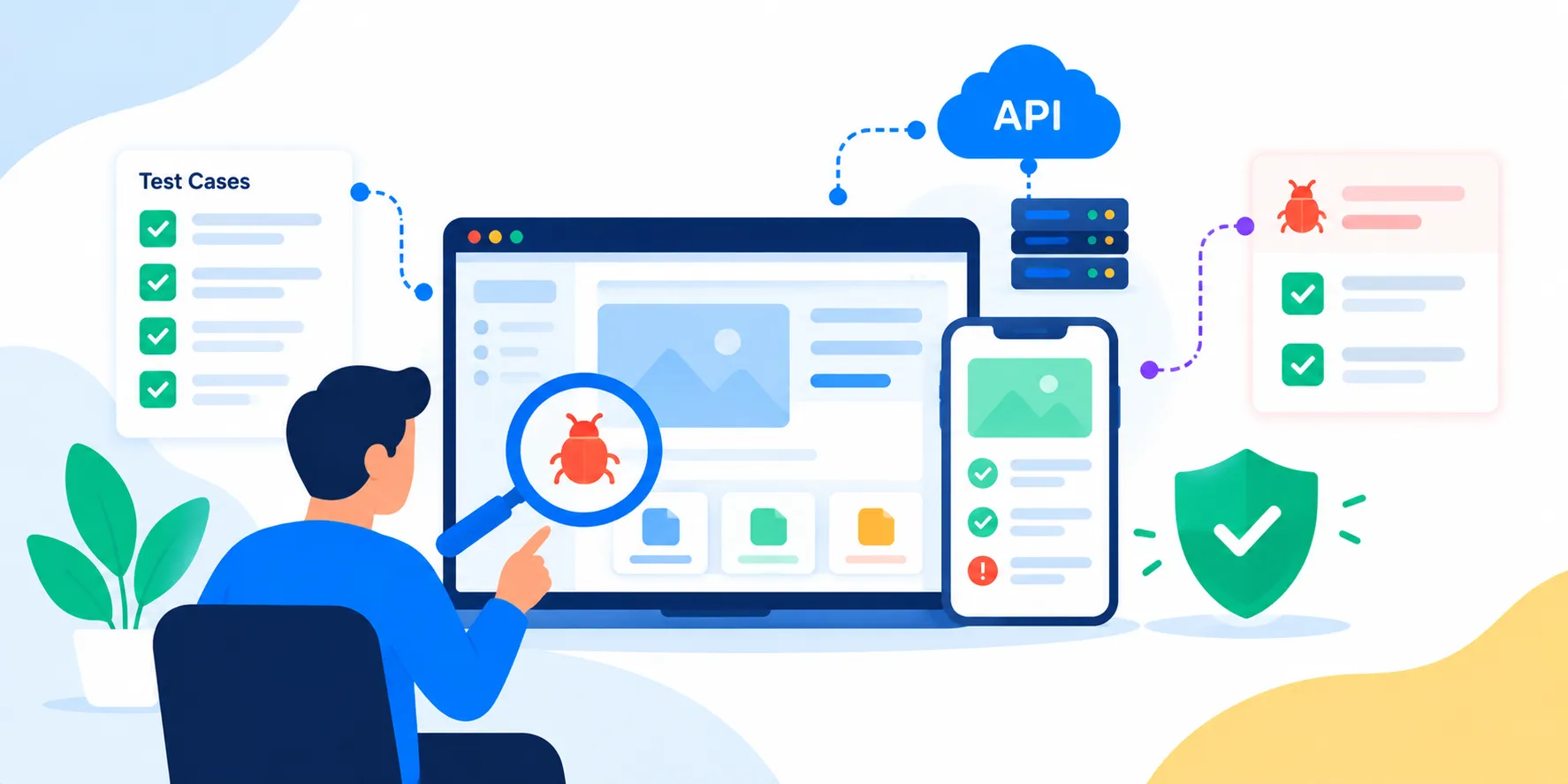
Software Testing Is About Business Risk, Not Just Bugs
Software testing should answer a practical question: can customers, employees, partners, and connected systems use the product as intended without unacceptable risk? That requires more than checking whether individual screens work.
Our software testing services combine structured test planning with manual, exploratory, functional, regression, integration, API, web, mobile, compatibility, usability, and release-focused validation. The scope is shaped around your product, users, integrations, release cadence, and business-critical workflows.
The goal is not to claim that testing can guarantee a defect-free release. The goal is to create useful evidence about what has been tested, what failed, what was fixed, what remains risky, and what should happen before release.
Built for Product Teams
Who Our Software Testing Services Help
Testing needs change as products add users, integrations, devices, roles, features, and release frequency.
- ✓SaaS & Product CompaniesValidate critical workflows while the product evolves through frequent releases.
- ✓Growing BusinessesAdd structured QA coverage when informal testing is no longer enough.
- ✓Enterprise ApplicationsCoordinate testing across roles, modules, integrations, environments, and release dependencies.
- ✓E-commerce ProductsProtect catalog, checkout, payments, orders, accounts, promotions, and operational workflows.
- ✓Teams Without QA CapacityAdd focused testing support without immediately building a large internal QA organization.
- ✓Legacy ModernizationEstablish regression and functional coverage while older systems are changed or replaced.
End-to-End Software Quality
Software Testing Services We Offer
Our software testing services cover the testing lifecycle from strategy and functional validation through regression and release readiness.
Software Testing Consulting & Strategy
Define test scope, risks, environments, priorities, coverage and release gates around business requirements.
Functional Testing
Validate features, workflows, business rules, forms, permissions and expected behavior.
Manual & Exploratory Testing
Use human-led exploration to uncover edge cases, usability issues and unexpected behavior.
Regression Testing
Retest critical existing functionality after changes, fixes, integrations and releases.
Integration Testing
Validate data and behavior across internal services, modules and third-party systems.
System Testing
Validate complete application behavior against functional and business requirements.
API Testing Services
Check endpoints, authentication, validation, errors, contracts, data and integration behavior.
Web Application Testing
Test browser workflows, responsive layouts, roles, forms, dashboards and customer journeys.
Mobile App Testing
Validate iOS and Android behavior across devices, OS versions, permissions and release builds.
Compatibility Testing
Check browsers, operating systems, screen sizes, devices and supported environments.
Usability & Accessibility Testing
Identify friction, confusing interactions, keyboard issues and accessibility concerns.
User Acceptance Testing Support
Prepare scenarios and evidence that help business stakeholders validate acceptance criteria.
Test Automation Strategy & Implementation
Identify stable, repeatable checks worth automating without turning automation into unnecessary maintenance.
Release & Quality Engineering
Coordinate test execution, defect triage, retesting and release-readiness reporting.
Start With What Can Hurt the Business
Risk-Based Test Strategy
A useful test strategy prioritizes the workflows and failure modes that matter most.
Critical Journey Mapping
Identify login, onboarding, checkout, payments, reporting, admin and other business-critical paths.
Risk Classification
Rank scenarios by customer impact, revenue impact, security sensitivity, complexity and likelihood of failure.
Coverage Planning
Map requirements, roles, data states, integrations and environments to test coverage.
Release Gates
Define the evidence needed before a feature or release can move forward.
Exploratory Testing
Reserve human-led testing for areas where scripted checks are unlikely to reveal every issue.
Regression Prioritization
Maintain a focused set of repeatable checks around the product's most important existing behavior.
Validate How the Product Actually Behaves
Functional & Manual Testing
Functional testing checks whether software does what users and business requirements expect.
Feature Validation
Verify new features against requirements, acceptance criteria and expected workflows.
Business Rules
Test calculations, conditions, permissions, status changes, pricing and workflow rules.
Role-Based Workflows
Validate what different user roles can see, create, update, approve and access.
Forms & Validation
Check required fields, formats, boundary values, errors and useful feedback.
Exploratory Testing
Investigate real product behavior beyond predefined test cases.
Smoke & Sanity Checks
Perform fast checks to determine whether a build is suitable for deeper testing.
Test the Connections Between Systems
API, Integration & System Testing
Many production defects occur at the boundaries between services, modules, APIs and external platforms.
API Behavior
Validate status codes, payloads, validation, authentication, errors and response behavior.
Service Integration
Check data handoffs between frontend, backend, databases, queues and supporting services.
Third-Party Integrations
Validate payments, messaging, CRM, ERP, analytics, storage and other external dependencies.
End-to-End Workflows
Follow business transactions across multiple components from initiation through completion.
Failure Handling
Verify timeouts, invalid inputs, unavailable dependencies and recoverable errors.
Data Consistency
Check that important records remain accurate as information moves between connected systems.
Validate Real User Experiences
Web & Mobile Application Testing
Testing across actual browsers, devices and responsive states helps expose issues that desktop-only checks can miss.
Browser Testing
Validate supported browser versions and important customer workflows.
Responsive Testing
Check layouts, navigation, forms and interactions across screen sizes.
Mobile OS Testing
Validate iOS and Android behavior across supported versions and devices.
Device Behavior
Check permissions, notifications, orientation, connectivity and hardware-dependent workflows.
Real-World Scenarios
Test slow networks, interruptions, session changes and realistic user sequences.
Release Build Validation
Run focused checks against release candidates before distribution or production rollout.
Protect Existing Functionality
Regression, Compatibility & Release Testing
Every significant change can affect something that worked previously. Regression testing keeps critical behavior visible.
Regression Suites
Maintain prioritized repeatable checks around critical workflows.
Fix Verification
Retest defects after engineering changes and confirm the original issue is resolved.
Cross-Browser Coverage
Check important journeys across supported browser environments.
Cross-Device Coverage
Validate mobile and responsive behavior across supported device combinations.
Release Candidate Testing
Run targeted smoke, functional and regression cycles before release.
Go/No-Go Evidence
Summarize defects, coverage, retesting and known risks for release decisions.
Make Findings Actionable
Defect Management & Quality Reporting
Good QA reporting helps engineers fix problems quickly and helps product owners understand remaining risk.
Clear Defect Reports
Document expected behavior, actual behavior, reproduction steps, environment and evidence.
Severity & Priority
Separate technical severity from business priority so teams fix the right problems first.
Defect Triage
Review findings with product and engineering teams and clarify ownership.
Retesting
Verify fixes and check related workflows for unintended side effects.
Coverage Reporting
Show what was tested, what was skipped, and where coverage remains limited.
Release Summary
Provide a concise quality view for the release decision and remaining risks.
Automation Where It Pays Back
Automation is part of software testing, but it should not automatically replace manual QA. Stable, repeatable, high-value checks are strong automation candidates; new features, exploratory scenarios, visual judgment and changing workflows may benefit more from human testing.
Our approach is to identify repetitive regression paths, API checks, smoke tests and important workflows that can be executed consistently. Automation can then grow alongside the product rather than becoming a large suite that is expensive to maintain.
For teams that already have automation, we can also help identify flaky checks, coverage gaps and areas where the existing suite no longer reflects the product.
Reliable Testing Needs Reliable Conditions
Test Data & Environment Readiness
Testing quality depends on representative data, stable environments and clear configuration.
Test Data Planning
Create or identify data states needed to exercise normal, boundary and exception scenarios.
Environment Validation
Confirm the application, APIs, dependencies and configuration are available for the planned test cycle.
Role & Permission Setup
Prepare representative users and access levels for role-based testing.
Integration Stubs & Dependencies
Plan how unavailable or unstable external dependencies will be handled during testing.
Data Reset & Reuse
Keep repeatable test scenarios practical by controlling state between test runs.
Environment Evidence
Record versions, browsers, devices and configurations used when issues are found.
Where Testing Creates Immediate Value
Software Testing Use Cases
Testing can be structured around a specific release problem rather than a generic QA checklist.
Pre-Launch Testing
Validate critical workflows and release risks before a new product reaches customers.
Major Feature Releases
Test new functionality alongside affected existing workflows.
Frequent SaaS Releases
Build repeatable regression coverage around high-change product areas.
Platform Integrations
Validate data and behavior across APIs and external services.
Legacy Modernization
Create enough regression confidence to change older systems safely.
Independent QA Review
Bring an outside testing perspective when internal teams need additional coverage.
Quality for Different Business Workflows
Software Testing Across Industries
Testing scope changes with domain rules, users, integrations and operational risk.
SaaS & Technology
Validate multi-role applications, subscriptions, integrations and frequent product releases.
E-commerce
Protect catalog, checkout, payments, promotions, orders and customer accounts.
Healthcare
Test workflows, permissions, data handling and reliability around sensitive business processes.
Finance
Validate transaction workflows, permissions, calculations, integrations and audit-sensitive behavior.
Logistics
Test tracking, dispatch, notifications, APIs and operational dashboards.
Manufacturing
Validate ERP integrations, workflows, inventory, production and operational applications.
Education
Test portals, learning workflows, assessments, content and role-based access.
Professional Services
Validate internal business systems, customer portals, workflows and reporting.
Our Software Testing Process
A structured testing process keeps coverage tied to requirements, risk and release goals.
Understand the Product
Review requirements, users, workflows, integrations, environments and release goals.
Map Business-Critical Journeys
Identify the workflows where failure would create the greatest customer or business impact.
Assess Risk
Prioritize functionality based on impact, complexity, change level, dependencies and history.
Define Test Coverage
Create the functional, regression, integration, compatibility and UAT coverage needed for the release.
Prepare Data & Environments
Confirm test data, accounts, devices, browsers, builds, integrations and environment readiness.
Design Test Scenarios
Create practical scenarios, cases, acceptance checks and exploratory charters.
Execute Functional Testing
Validate features, workflows, rules, roles, forms and critical user journeys.
Test Integrations & APIs
Validate service boundaries, external dependencies, data movement and failure handling.
Run Regression & Compatibility
Retest important existing behavior across the required browsers, devices and environments.
Report & Triage Defects
Document findings, prioritize them with the team and support efficient investigation.
Retest & Assess Release Risk
Verify fixes, update coverage and summarize unresolved risks and limitations.
Improve the Next QA Cycle
Convert recurring checks into stronger regression coverage and improve the testing strategy over time.
Software Testing Technology Stack
Tools are selected around the application, testing layer, team workflow and long-term maintainability.
Flexible QA Support
Software Testing Engagement Models
Start with a focused testing cycle or build ongoing quality capacity around your roadmap.
Pre-Release Testing Sprint
Focused functional, regression, integration and compatibility testing before an important release.
QA Audit & Coverage Review
Assess current testing coverage, risk areas, defects and opportunities for improvement.
Dedicated QA Team
Add QA capacity that works with product and engineering teams across releases.
Ongoing Software Testing
Maintain continuous functional and regression coverage as the product evolves.
When Software Testing Services Make Sense
A dedicated software testing engagement makes sense when product releases are creating recurring regressions, important workflows are tested informally, QA capacity is limited, a launch deadline is approaching, or integrations and user roles have made the product difficult to validate consistently.
It is also useful when a business needs an independent view of release quality. A fresh QA team can examine assumptions, reproduce known issues, explore important workflows, and provide evidence that helps product owners make better release decisions.
The right scope does not mean testing everything equally. It means spending the most testing effort where failure would matter most.
Practical Quality Engineering
Why Businesses Choose Axora for Software Testing
Our testing approach connects QA with product behavior, engineering workflows and real business risk.
- ✓Product-Aware TestingWe test workflows and business behavior rather than treating the application as a collection of isolated screens.
- ✓Risk-Based CoverageTesting effort is prioritized around impact, change, complexity and customer-facing risk.
- ✓Manual + AutomationUse human judgment for exploration and automation for stable repeatable checks.
- ✓Engineering CollaborationDefects are reported with useful reproduction context so developers can investigate efficiently.
- ✓Clear Release EvidenceCoverage, defects, retesting and known risks are summarized for practical decisions.
- ✓Continuous ImprovementRecurring failures become opportunities to improve regression coverage and QA practices.
Testing Should Give Your Team Better Decisions
Effective QA is not measured by the number of test cases alone. It is measured by whether the team understands the product's important risks, finds meaningful defects before customers do, and has enough evidence to make informed release decisions.
We focus on clear test scope, reproducible defects, disciplined retesting, practical regression coverage and communication with product and engineering stakeholders.
That creates a testing process that can grow with the product instead of becoming a separate checklist that teams only revisit before a launch.
Related Services
Services to Support Software Quality

Web Application Development Company
Build secure, scalable web applications around your workflows, users, data, and growth plans—from customer portals and internal business apps to SaaS platforms, dashboards, marketplaces, and enterprise web systems.
Learn more
API Development Services
Build secure, scalable, and high-performance Web APIs, custom microservices integrations, and RESTful structures. Enterprise API development company delivering premium connector solutions.
Learn more
DevOps Services Company
Build faster, safer, and more reliable software delivery with DevOps services covering CI/CD automation, infrastructure as code, containers, Kubernetes, cloud operations, DevSecOps, observability, SRE, and continuous optimization.
Learn more
Mobile App Development
iOS and Android apps with offline-first, real-time sync, delightful UX, and analytics to grow activation and retention.
Learn moreFrom Our Blog
Software Engineering Insights
Frequently Asked Questions
Common questions about software testing services and QA engagements.
Ready to Transform Your Business?
Get started with our intelligent digital solutions. Our team is ready to help you unlock the power of AI-driven technology.
Send us a message
Fill out the form below and we'll get back to you within 24 hours
Contact Information
Reach out to us through any of these channels